If you’re upgrading your kitchen, a refrigerator isn’t just about keeping food cold anymore. LG’s smart French door models with dual ice makers have redefined what homeowners expect from a major appliance, combining serious storage capacity, advanced tech integration, and two separate ice-making systems that eliminate the “who forgot to refill the tray” drama. These units sit at the intersection of function and convenience, offering features that genuinely improve daily routines rather than just ticking boxes on a spec sheet. Whether you’re hosting frequently, managing a busy household, or simply tired of running out of ice mid-party, understanding what sets these refrigerators apart helps you make an well-informed choice that’ll serve your kitchen for the next decade or more.
Table of Contents
ToggleKey Takeaways
- LG’s smart French door refrigerator with dual ice maker combines a door-mounted Craft Ice system for slow-melting spheres and a freezer ice maker for standard cubes, eliminating the need to choose between ice types and supporting high-volume use.
- The ThinQ app integration enables remote temperature control, energy monitoring, and smart diagnostics through your phone, while voice control compatibility with Alexa and Google Assistant adds hands-free convenience for basic functions.
- Energy Star-certified models consume 10–15% less electricity than federal standards with an Inverter Linear Compressor that adjusts cooling power dynamically, resulting in annual energy costs around $70–$90 and whisper-quiet operation at 39–42 decibels.
- French door design with 26–28 cubic feet of capacity offers superior fresh food access at eye level, wider shelves for larger items, and adjustable humidity crisper drawers, making it ideal for families of four to six.
- Pre-installation planning is essential: verify doorway and hallway width (36 inches minimum), confirm ceiling clearance, and budget $150–$300 for professional plumbing if running a water line to the ice makers and dispenser.
- The InstaView door-in-door panel reduces cold air loss by up to 41% and eliminates energy waste from unnecessary door openings, while the 10-year compressor warranty exceeds industry standards and reflects LG’s confidence in durability.
What Makes LG’s Dual Ice Maker System Stand Out
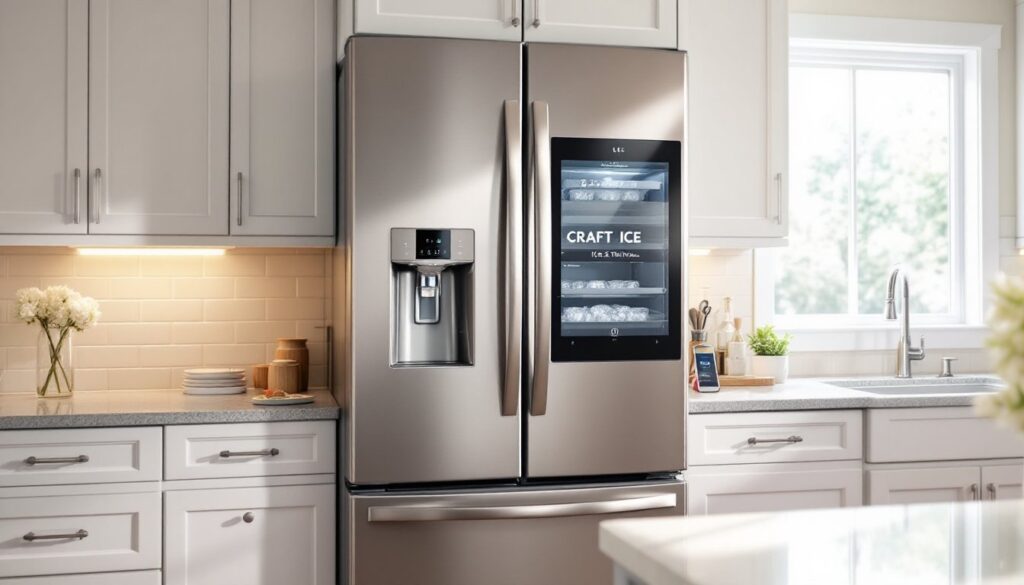
The dual ice maker configuration is the headline feature, and it’s more than a gimmick. LG positions one ice maker in the refrigerator door (the Craft Ice system on select models) and a second traditional cube maker in the freezer compartment. This setup delivers two types of ice simultaneously, slow-melting 2-inch spheres for cocktails or cold brew, plus standard cubes for everyday use.
The door-mounted Craft Ice maker produces round ice spheres that melt slower than conventional cubes, reducing dilution in drinks. It takes about 24 hours to produce a batch, so it’s not instantaneous, but the bin holds enough for a weekend gathering. The freezer ice maker cranks out standard cubes continuously, with a storage bin capacity of roughly 4.2 pounds depending on the model.
Both systems are separate, so you’re never choosing between ice types. The dual setup also means higher total output, important if you’re filling coolers, hosting, or just have a household that burns through ice quickly. LG’s IcePlus mode accelerates production when you need extra volume, though it’ll nudge energy use upward temporarily.
One practical consideration: the door ice maker reduces interior shelf space slightly, and it requires a water line connection during installation. If your kitchen doesn’t have an accessible water supply near the fridge location, you’ll need to run one, this might involve drilling through cabinetry or flooring, which some homeowners tackle themselves and others hire a plumber for.
Smart Features That Transform Your Kitchen Experience
LG’s ThinQ app integration turns the refrigerator into a connected appliance you can monitor and control remotely. You can adjust temperatures, activate express cooling or freezing modes, and receive alerts if the door’s left open, all from your phone. It’s genuinely useful if you’re away from home and realize you forgot to turn down the temp before a grocery haul, or if you want to check settings without opening the door and letting cold air escape.
The app also tracks energy usage and provides diagnostics. If something’s off, a sensor fault, a temperature deviation, you’ll get a notification before food starts spoiling. LG’s SmartDiagnosis feature lets you troubleshoot issues by running a test cycle through the app, which can save a service call if it’s a minor glitch.
ThinQ Technology and Voice Control Integration
Voice control works through Amazon Alexa and Google Assistant, so you can ask your smart speaker to adjust fridge temperature, turn on the ice maker’s turbo mode, or check the current internal temp. It’s hands-free convenience that’s particularly handy when you’re mid-recipe with flour-covered fingers. But, recognition through platforms like The Kitchn and major appliance reviewers confirms that voice commands are limited to basic functions, you can’t ask it to defrost something or rearrange shelves.
The InstaView door-in-door panel (on models equipped with it) lets you knock twice to illuminate the interior without opening the door, reducing cold air loss by up to 41% according to LG’s internal testing. The tinted glass panel becomes transparent when lit, so you can see what’s inside and decide if you actually need to open it. Skeptics call it a novelty, but in homes with kids who stand staring into the fridge, it genuinely cuts energy waste.
Capacity, Storage, and Organization Benefits
LG’s French door models with dual ice makers typically range from 22 to 30 cubic feet of total capacity, with the most popular configurations landing around 26–28 cu. ft. That’s enough space for a family of four to six, with room for bulk shopping trips and meal prep containers.
The French door design, two narrower doors on top, a pull-out freezer drawer below, offers better access to fresh food at eye level compared to side-by-side models. You’re not bending down constantly for vegetables or condiments. The wider shelves (often 33–36 inches across) accommodate sheet pans, party platters, and pizza boxes without awkward angling.
Inside, LG uses adjustable shelving with spill-proof edges (tempered glass with raised rims to contain drips) and slide-out bins for produce. The crisper drawers include humidity controls, set one to high for leafy greens, the other to low for fruits and ethylene-sensitive items. Many models feature a full-width pantry drawer with adjustable temperature zones, letting you switch between meat storage (29–33°F), deli items, or beverages.
The freezer drawer typically has a two-tier design: an upper sliding bin for frequently accessed items and a lower deep bin for bulk storage. Dividers and door bins keep bags of frozen vegetables from becoming an avalanche every time you open it.
One drawback: dual ice makers do consume freezer space. The door-mounted Craft Ice bin takes up roughly 20% of the upper freezer shelf area. If you prioritize maximum freezer capacity over specialty ice, models without the door ice maker reclaim that space.
Energy Efficiency and Long-Term Cost Savings
Most LG smart French door refrigerators with dual ice makers carry an Energy Star certification, meaning they meet EPA guidelines for energy efficiency, typically using 10–15% less electricity than the federal minimum standard. Expect annual energy consumption around 600–750 kWh depending on model size and features, translating to roughly $70–$90 per year in electricity costs at the national average rate of $0.12 per kWh (your rate will vary by region and utility provider).
LG’s Inverter Linear Compressor technology adjusts cooling power based on internal conditions rather than cycling fully on and off like traditional compressors. This reduces energy spikes, minimizes temperature fluctuations (keeping food fresher longer), and cuts noise levels to around 39–42 decibels, quieter than a typical conversation. LG backs this compressor with a 10-year warranty, which is longer than the industry standard and reflects confidence in durability.
The LED lighting throughout the interior is another efficiency play. LEDs draw a fraction of the power that incandescent bulbs used in older models consumed, and they last significantly longer, you won’t be replacing bulbs every few years.
Energy savings also come from features like the InstaView panel, which reduces door openings, and the smart app’s diagnostics, which can alert you to inefficiencies (a faulty door seal, an obstructed vent) before they spike your electric bill. In fact, some of these innovations have been highlighted in Good Housekeeping’s 2026 Kitchen Awards for combining performance with efficiency.
One note: dual ice makers do add a small energy load compared to single-maker models. If you rarely use the specialty ice, you can disable the door ice maker through the app to trim consumption slightly.
Installation Considerations for Your Home
Before ordering, measure carefully. French door refrigerators are wide, typically 35.75 to 36 inches in width (standard counter-depth or slightly wider for full-depth models). Height ranges from 68 to 70 inches, so confirm ceiling clearance if you have soffits or overhead cabinets. Depth varies: counter-depth models (around 30 inches deep, not including handles) sit flush with standard 24-inch-deep cabinets plus a 1-inch countertop overhang, while standard-depth models protrude 6–8 inches past the counter edge but offer more interior capacity.
Check the doorway and hallway widths along the delivery path. Most units need at least a 36-inch-wide opening to maneuver through. If you’re dealing with tight corners or staircases, removal of doors (both the fridge doors and sometimes interior house doors) is often necessary. LG includes detailed installation guides, and many retailers offer delivery and installation services for $100–$200, which includes haul-away of your old unit.
You’ll need a dedicated 120V electrical outlet within 6 feet of the final location, most local codes follow the National Electrical Code (NEC) requirement for GFCI protection in kitchen outlets, though not always for large appliances. Verify with your jurisdiction. For the ice makers and water dispenser, a ¼-inch copper or braided stainless steel water line is required, with a shutoff valve accessible behind or beside the unit. If you’re not comfortable sweating copper pipe or running a line through cabinetry, hire a plumber, typical cost is $150–$300 depending on complexity.
Leave at least 1 inch of clearance on each side and 1 inch at the top for ventilation. The coils are often rear-mounted, so you don’t need as much rear clearance as older models, but consult the manual. Allow the refrigerator to stand upright for 4–6 hours after delivery before plugging it in if it was transported on its side, this lets refrigerant settle and prevents compressor damage.
Finally, if you’re integrating smart features, ensure your Wi-Fi signal reaches the kitchen. The fridge connects via 2.4 GHz Wi-Fi (most routers support this), and a strong signal prevents connectivity dropouts that interrupt app control and notifications. Many design-focused remodelers, including those featured on Remodelista, emphasize planning tech infrastructure during kitchen renovations to avoid headaches later.
Conclusion
LG’s smart French door refrigerators with dual ice makers deliver practical benefits that go beyond flashy features. The combination of generous storage, energy-efficient operation, and genuinely useful smart tech makes them a solid investment for homeowners upgrading their kitchens. Just measure twice, plan your water line, and you’ll have a reliable workhorse that keeps up with your household’s demands for years.