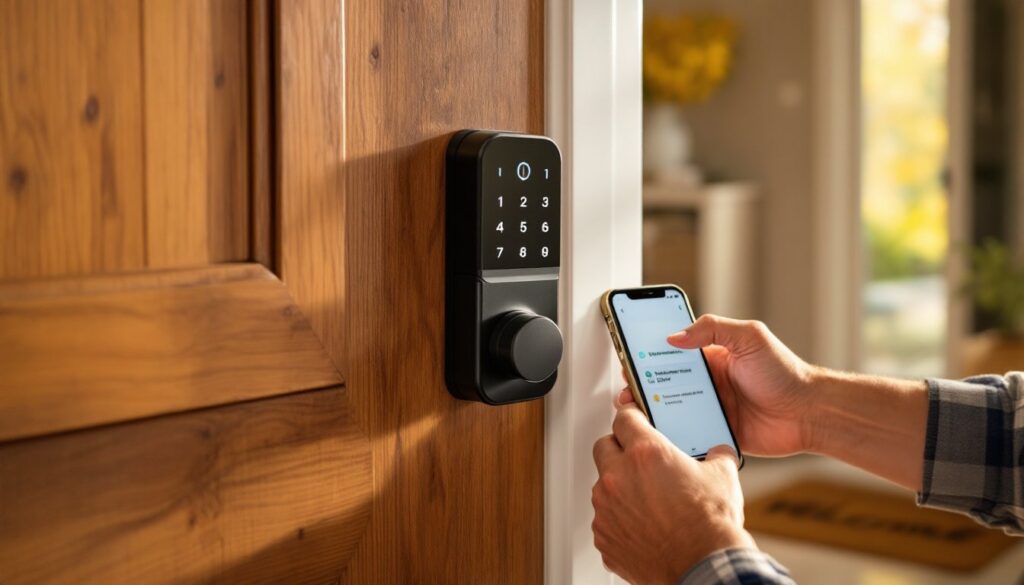
Shopping for a smart lock at Lowe’s puts you in front of the most reliable brands in keyless entry, with models that don’t require a subscription or proprietary hub to function. Unlike big-box competitors, Lowe’s stocks options across Wi-Fi, Bluetooth, and Z-Wave connectivity, meaning you can match a lock to your existing smart home setup or start fresh. Whether you’re upgrading a 1960s front door or outfitting a new build, the right smart lock eliminates fumbling for keys in the rain and lets you hand out temporary access codes without duplicating metal.
Table of Contents
ToggleKey Takeaways
- Lowe’s smart lock options offer Wi-Fi, Bluetooth, and Z-Wave connectivity without requiring subscriptions or proprietary hubs, allowing you to match a lock to your existing smart home setup.
- Top models like Kwikset Halo, Schlage Encode Plus, and Yale Assure Lock 2 provide features ranging from 250 user codes to built-in Wi-Fi 6 and fingerprint recognition, with battery life averaging 6–12 months.
- Proper installation of your smart lock depends on measuring your door’s backset and strike plate alignment; most common failures result from rushing prep work rather than technology issues.
- Lowe’s provides in-store associates to confirm door compatibility, same-day pickup availability, and a 90-day return policy, reducing the risk of ordering an incompatible smart lock online.
- All major smart locks at Lowe’s integrate with Alexa, Google Assistant, or Apple HomeKit and work offline if Wi-Fi drops, making them suitable for renters, rural homeowners, and multi-platform smart home systems.
Why Choose a Smart Lock from Lowe’s?
Lowe’s carries every major residential smart lock manufacturer, stocks replacement parts in-store, and offers installation services if you’d rather not drill into your door yourself. Most importantly, you can inspect the lock’s backplate thickness, keypad layout, and finish in person, critical when you’re replacing a decades-old deadbolt with non-standard boring.
Buying from Lowe’s also means same-day pickup for most models, so you’re not waiting a week for a porch pirate to nab a $250 lock off your doorstep. Their return policy covers smart locks for 90 days, which gives you time to test connectivity with your phone and router placement.
Most locks sold at Lowe’s integrate with Alexa, Google Assistant, or Apple HomeKit, and many work offline if your Wi-Fi drops, something renters and rural homeowners appreciate. If you’re building a whole-home smart system, starting with a lock from Lowe’s lets you test compatibility before committing to an ecosystem.
One practical advantage: Lowe’s in-store associates can confirm whether a lock fits your door’s backset (the distance from the door edge to the center of the bore hole). Standard residential doors use a 2 3/8″ or 2 3/4″ backset, but older homes sometimes vary. Measuring wrong means redrilling, and redrilling a steel door is not a beginner project.
Best Smart Locks Available at Lowe’s
Kwikset Halo Wi-Fi Smart Lock
The Kwikset Halo connects directly to your home Wi-Fi without a hub, which cuts cost and setup time. It runs on 4 AA batteries (typically lasting 6–12 months depending on usage) and includes a backlit keypad for nighttime code entry.
Kwikset uses SmartKey technology, letting you rekey the lock in about 30 seconds with the included tool, useful if you’re buying a resale home or lost track of who has a physical key. The Halo supports up to 250 user codes, which makes it overkill for most households but practical for short-term rental hosts.
Installation fits standard door prep (2 1/8″ cross bore, 1″ latch bore). The interior assembly is bulkier than traditional deadbolts, so check clearance if you have a storm door or tight entryway. Many independent smart lock reviews rank the Halo highly for Wi-Fi reliability and battery life.
Schlage Encode Plus
The Schlage Encode Plus is the first residential smart lock with built-in Wi-Fi 6 and native Apple Home Key support, meaning iPhone and Apple Watch users can unlock with a tap (no app launch required). It also works with Alexa, Google Assistant, and Samsung SmartThings.
Schlage’s Grade 1 ANSI rating (the highest residential security standard) makes this lock the go-to if you live in a high-traffic urban area or have insurance requirements for break-in resistance. The deadbolt throw is hardened steel, and the interior escutcheon is metal, not plastic like some budget models.
Battery life runs about 6 months on 4 AA batteries. The Encode Plus includes a capacitive fingerprint reader (in select finishes), which is faster than typing a code but requires a firmware update post-installation. If you’re comparing top smart locks across price points, the Encode Plus sits at the premium end but justifies the cost with durability and multi-platform compatibility.
Yale Assure Lock 2
The Yale Assure Lock 2 is a modular system: you buy the base lock, then add a Wi-Fi, Z-Wave, Zigbee, or Matter module depending on your smart home protocol. This flexibility future-proofs your purchase if you switch ecosystems.
Yale offers both keyed and keyless versions. The keyless model eliminates the cylinder entirely, which gives a cleaner look and removes the risk of lock bumping. The touchscreen keypad is backlit and responsive in freezing temperatures, important if you’re in the upper Midwest or mountain states.
Installation is straightforward on doors prepped for a standard deadbolt. The lock’s auto-lock feature can be set from 10 seconds to 4 minutes, and you can disable it entirely if you have kids who forget to close the door fully. Battery life averages 8–12 months on 4 AA batteries. Experts covering the best smart locks for 2026 often highlight Yale’s Matter module as a key advantage for tech-forward homeowners.
How to Install Your Lowe’s Smart Lock
Tools you’ll need:
- Phillips-head screwdriver (most locks include one, but a ratcheting driver speeds things up)
- Tape measure
- Pencil
- Drill with 2 1/8″ hole saw and 1″ spade bit (only if installing on a new door or changing hardware)
- Safety glasses (if drilling)
Before you start:
Check your door’s thickness (most smart locks fit 1 3/8″ to 1 3/4″ doors: commercial or security doors may be thicker). Measure the backset (distance from door edge to center of existing deadbolt hole). If your door isn’t prepped, you’ll need to drill. Follow the lock’s template precisely, off by 1/8″ and you’ll have binding issues.
Step-by-step installation:
-
Remove the old deadbolt. Unscrew the interior thumb turn assembly, then pull the exterior cylinder free. Remove the latch bolt from the door edge. Keep the screws, some smart locks let you reuse them if they’re the right length.
-
Install the new latch. Slide the latch bolt into the door edge. The tapered side of the bolt should face the direction the door closes. Secure with the provided screws. If the faceplate doesn’t sit flush, chisel out the mortise slightly (common on older doors with built-up paint).
-
Thread the cable (if applicable). Some models use a ribbon cable connecting exterior and interior assemblies. Route it carefully, kinking the cable causes connectivity errors that look like a defective lock.
-
Mount the exterior assembly. Align the keypad or cylinder with the latch, ensuring the tailpiece (the metal tab) engages the latch mechanism. You should feel it click into place. If it spins freely, the backset or alignment is off.
-
Attach the interior assembly. Most smart locks use long mounting bolts that thread through the door into the exterior plate. Tighten evenly, overtightening warps the backplate and causes the deadbolt to stick.
-
Install batteries and test. Insert batteries, then manually extend and retract the deadbolt several times. It should move smoothly without grinding. If it binds, loosen the mounting bolts slightly or check that the strike plate on the jamb aligns with the bolt path.
-
Connect to your app. Follow the manufacturer’s pairing instructions. Most locks require you to scan a QR code or enter a setup code printed on the installation manual. Important: Don’t throw away that manual, the setup code is often needed for future resets.
-
Program user codes. Set a master code first, then add codes for family members. Use codes that aren’t obvious (birthdays, 1234, etc.). If the lock supports auto-lock, test the timing to ensure it doesn’t lock before you’ve grabbed the mail.
Common installation issues:
- Deadbolt won’t extend fully: Check that the strike plate on the door jamb is aligned. You may need to file the strike opening or reposition it.
- Keypad unresponsive: Verify batteries are seated correctly and have at least 1.5V each. Cheap or old batteries cause intermittent failures.
- Wi-Fi won’t connect: Most smart locks only work on 2.4 GHz networks. If your router is set to 5 GHz only, the lock won’t pair. Check router settings or enable a guest network on 2.4 GHz.
When to call a professional:
If your door isn’t prepped for a deadbolt, hire a locksmith or handyman. Drilling a clean 2 1/8″ bore hole through a steel door without a drill press is tricky, blow the alignment and you’ve got a security gap. Also, if your door is load-bearing or fire-rated (common in condos or apartments), modifying it may violate code or your lease. Check with your HOA or landlord before drilling.
Conclusion
A smart lock from Lowe’s delivers keyless convenience without locking you into a single ecosystem or subscription. Measure your door’s backset, pick a lock that matches your connectivity needs, and don’t skip the strike plate alignment during install. Most failures come from rushing the prep work, not the technology.