If you’ve ever looked at a bulky smart lock and thought, “There’s got to be a better way,” Level‘s made for you. Unlike most smart locks that scream “tech upgrade” from the curb, Level’s entire design philosophy centers on invisibility, the hardware fits entirely inside a standard door prep, leaving the exterior looking like a traditional deadbolt or lever. For homeowners who want app control, remote access, and keyless entry without changing their door’s appearance, Level offers a rare combination: modern functionality hidden in plain sight. This guide walks through what sets Level apart, how the technology works, which model fits different situations, and whether the investment makes sense for your home.
Table of Contents
ToggleKey Takeaways
- Level smart locks hide all electronics inside your door’s existing bore hole, maintaining a traditional deadbolt appearance on the outside while delivering modern keyless entry and remote access.
- Installation is DIY-friendly and takes 15-30 minutes with just a Phillips screwdriver, with no drilling or door modifications needed for standard North American door prep.
- The Level Lock+ model includes built-in Wi-Fi for remote control from anywhere, while the Bolt and Lock models use Bluetooth and require a hub for off-site access.
- Level locks integrate seamlessly with Apple HomeKit, Google Home, Amazon Alexa, and Matter protocol, giving you flexibility across smart home ecosystems without being locked into one platform.
- Battery life reaches up to a year on CR2 batteries, with low-battery alerts sent through the app, making maintenance simple and predictable for long-term use.
What Makes Level Smart Lock Different from Traditional Smart Locks?
Most smart locks bolt onto the interior side of your door with chunky battery packs, touchscreens, and keypads that stick out like a sore thumb. Level flips that approach. All electronics, motor, battery, circuit board, fit inside the standard 2-1/8″ bore hole and backset space that already exists in nearly every exterior door in North America.
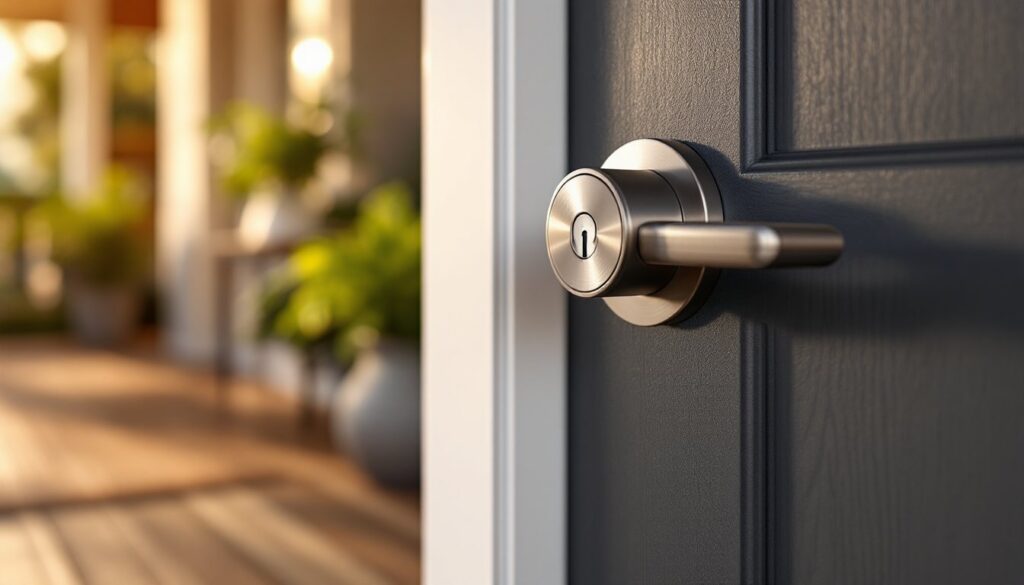
From the outside, you see only the finish plate and keyway (or just a thumb turn, depending on the model). No visible branding, no touchpad, no giveaway that it’s smart. The interior side shows a simple thumb turn or lever, batteries slide into the deadbolt itself or a discrete housing, depending on whether you choose the Bolt, Lock, or Lock+ model.
This invisibility isn’t just aesthetic. It reduces the target profile for tampering and keeps your home’s curb appeal intact, which matters if you’re in a historic district, an HOA with strict guidelines, or simply don’t want your front door looking like a hotel room. Installation uses the existing door prep, so there’s no new drilling, no door reinforcement, and in most cases, no need to change your existing keyed cylinder if you’re upgrading from a traditional deadbolt.
Key Features and Technology Behind Level Smart Locks
Level locks communicate via Bluetooth and, on some models, Wi-Fi or integration through Apple Home Key and Matter protocol. The Lock+ model includes built-in Wi-Fi, which allows remote control without needing a separate bridge or hub. Models without Wi-Fi rely on proximity unlock via Bluetooth or require an Apple TV, HomePod, or compatible hub for remote access.
The motor inside is compact but strong enough to throw the deadbolt reliably, Level rates it for 250,000 cycles, far beyond the typical homeowner’s usage over a decade. Battery life varies: expect up to a year on CR2 batteries (Lock+ uses four CR2s: Bolt uses one CR2), though heavy usage and extreme temperatures will shorten that. Low-battery alerts come through the app well before it dies.
Level supports Apple Home Key, which lets iPhone and Apple Watch users unlock the door with a tap, no app launch required. For Android users and broader ecosystems, Level integrates with Google Home, Amazon Alexa, and Matter, the new smart home interoperability standard that’s gaining traction in 2026. That means you’re not locked into one platform.
One safety feature worth noting: auto-lock can be set to engage after a specified time, and you can enable tamper alerts if someone forces the lock from outside. There’s no keypad on the lock itself, but you can grant temporary digital keys through the app, useful for contractors, cleaners, or Airbnb guests without handing out physical keys.
Installation Process: DIY-Friendly Setup
If you can swap a deadbolt, you can install a Level lock. The company designed it specifically for DIY installation, and most people finish in 15 to 30 minutes with just a Phillips screwdriver.
Here’s the general process:
- Remove your existing deadbolt: Unscrew the interior and exterior components, pull them free, and keep the strike plate unless it’s damaged.
- Check your door prep: Level requires a standard 2-1/8″ bore and either a 2-3/8″ or 2-3/4″ backset. Most residential exterior doors meet this. Measure to confirm.
- Install the exterior assembly: Slide the tailpiece through the latch, secure the exterior plate with the included adapter ring.
- Attach the interior assembly: Line it up with the tailpiece, snap or screw it into place (model-dependent), and insert batteries.
- Pair with the app: Download the Level app (iOS or Android), follow the pairing prompts via Bluetooth, and configure settings like auto-lock, notifications, and user access.
No cutting, no drilling, no chiseling. The lock fits the same footprint as your old hardware. If your door has non-standard prep or you’re replacing a mortise lock, Level won’t work without modification, at that point, call a locksmith or consider a different product.
PPE reminder: You’re handling small screws and metal components, so safety glasses are smart if a screw slips. Keep track of the tiny set screws: they’re easy to lose on a porch.
Level Smart Lock Models Compared: Which One Is Right for You?
Level offers three main models as of 2026: Bolt, Lock, and Lock+. Each fits different use cases, budgets, and door configurations.
Level Bolt (~$229) replaces only the deadbolt and works with your existing keyed cylinder and exterior hardware. It’s the most affordable and least visible option, perfect if you like your current keyholes and lockset but want smart features. Downside: you still carry a physical key, and it lacks Wi-Fi (Bluetooth and Home Key only).
Level Lock (~$329) is a complete deadbolt replacement with a keyed exterior and smart interior. It includes Bluetooth, Apple Home Key, and Matter support but no built-in Wi-Fi, so remote access requires a hub. Good middle ground for most homeowners who want full smart control but don’t mind using their phone nearby or setting up a hub.
Level Lock+ (~$429) adds built-in Wi-Fi for remote access anywhere, plus all the features of the Lock model. Best choice if you travel often, manage rental properties, or want to lock/unlock from across town without extra hardware. Battery consumption is slightly higher due to Wi-Fi, but Level’s engineers optimized it for about a year of typical use.
All three models come in standard finishes: Satin Nickel, Polished Brass, Matte Black. Match your existing hardware or coordinate with your door’s aesthetic.
If you’re replacing a handleset (deadbolt + lever combo), note that Level makes a Lock+ Touch model with a touch-activated keypad hidden in the exterior escutcheon, useful if you want a backup PIN code without the keypad look.
Smart Home Integration and Compatibility
Level locks play well with major ecosystems in 2026. If you’re running Apple HomeKit, the integration is seamless, add the lock in the Home app, assign it to a room, and include it in automation scenes (e.g., “lock the front door when I say ‘goodnight'”). Apple Home Key is arguably the smoothest unlock experience: tap your iPhone or Apple Watch to the lock, authenticate with Face ID, and you’re in. No app, no fumbling.
For Google Home, Level locks appear as controllable devices. You can say, “Hey Google, lock the front door,” and it works. Same with Amazon Alexa, voice control is reliable as long as your phone or hub is within Bluetooth range (or you’ve got the Lock+ with Wi-Fi).
The addition of Matter support in 2026 models is a big deal. Matter is the cross-platform standard backed by Apple, Google, Amazon, and others. It means your Level lock will work with current and future smart home platforms without proprietary hubs or workarounds. As connected home technology continues to evolve, Matter-compatible devices are a safer long-term bet.
One limitation: Level doesn’t currently integrate with DIY security systems like Ring Alarm or SimpliSafe in a deep way, you won’t get automatic arming/disarming tied to lock status unless you route it through a compatible hub and custom automation.
Pros and Cons: Is Level Smart Lock Worth the Investment?
Pros:
- Invisible from the outside: Maintains traditional door appearance, critical for aesthetics and HOA compliance.
- No new holes or door modifications: Fits standard residential door prep, making DIY install straightforward.
- Strong smart home integration: Works with Apple, Google, Alexa, and Matter, future-proof and flexible.
- Reliable unlock methods: Bluetooth proximity, Home Key tap, app control, or physical key, multiple backups.
- Long battery life: Up to a year on small CR2 batteries, with advance low-battery warnings.
Cons:
- Higher price point: Compared to August, Wyze, or Yale, Level costs more, budget $229 to $429 depending on model.
- No built-in keypad (except Touch model): If you want a PIN backup without using your phone, you’ll need the pricier Touch version.
- Bluetooth-only models need a hub for remote access: The Bolt and Lock require an Apple TV, HomePod, or similar bridge if you want to unlock from outside the home.
- Limited finish options: Satin Nickel, Matte Black, Polished Brass cover most tastes, but custom finishes aren’t available.
- Not for non-standard doors: Mortise locks, European-profile cylinders, and oddball backsets won’t work without costly modification.
Real-World Performance and User Experience
In everyday use, Level locks are fast and dependable. Bluetooth response time is typically under two seconds when approaching the door with auto-unlock enabled. Home Key tap is nearly instant. The motor is quiet, no loud grinding or buzzing that announces every unlock to the neighborhood.
Battery swaps are simple: pop out the interior thumb turn or lever, slide in fresh CR2s, and you’re done. The app is clean and intuitive, though some users report occasional connectivity hiccups when Bluetooth range is marginal or interference is high (thick metal doors, dense walls).
One real-world note: in cold climates (below 20°F for extended periods), battery life can drop noticeably. Keep spare CR2s on hand if you live in the northern U.S. or Canada. And if you’re in a busy household with kids constantly locking/unlocking, expect shorter intervals between battery changes.
For rental properties or Airbnb hosts, the ability to issue and revoke digital keys remotely is a major time-saver, no more lockbox juggling or rekeying between guests. The Lock+ model’s Wi-Fi makes this particularly smooth, and many property managers have reported fewer lockout calls since switching to smart locks that support temporary access codes and scheduling.