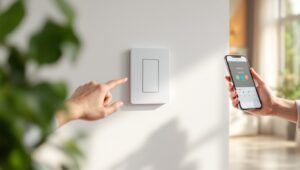
Smart thermostats have gone from novelty gadgets to essential home systems in less than a decade. Unlike the old programmable models that gathered dust while homeowners stuck with manual adjustments, today’s smart thermostats actually get used, and they deliver measurable results. They can learn household patterns, cut energy bills, integrate with voice assistants, and even diagnose HVAC problems before a system goes down. For DIYers upgrading their home automation or anyone tired of overpaying for heating and cooling, understanding what these devices can accomplish helps determine whether the investment makes sense.
Table of Contents
ToggleKey Takeaways
- A smart thermostat can learn household patterns and automatically adjust heating and cooling schedules, reducing manual tweaks and energy waste during empty hours.
- Remote control via smartphone apps allows homeowners to adjust temperatures from anywhere, preventing emergencies like frozen pipes or wasted heating during vacations.
- Smart thermostats track energy consumption and deliver measurable cost savings of 10–23% on heating and cooling bills through smarter scheduling and occupancy awareness.
- Integration with voice assistants and smart home ecosystems enables automation routines—like triggering away mode when everyone leaves or preheating before arrival—for seamless comfort and efficiency.
- Geofencing and motion-sensor occupancy detection automatically adapt to unpredictable schedules, benefiting shift workers and frequent travelers.
- Maintenance alerts monitor HVAC performance and flag issues like clogged filters or unusual system cycling before they become expensive repairs.
Automated Temperature Scheduling and Learning
The defining feature of a smart thermostat is its ability to build and execute temperature schedules without constant reprogramming. Most models offer two approaches: manual scheduling and adaptive learning.
Manual scheduling works like an upgraded version of old programmable thermostats. Users set temperature targets for different times of day, 68°F at 6 a.m. when the house wakes up, 62°F at 9 a.m. when everyone leaves, 70°F at 5 p.m. for evening comfort. The difference is in the interface: smartphone apps make adjustments simple, and changes sync across the system instantly.
Adaptive learning takes it further. Devices like the Nest Learning Thermostat monitor manual adjustments over the first week or two, then generate a schedule based on observed patterns. If someone cranks the heat every morning at 6:15 a.m., the system starts preheating at 6:00 a.m. automatically. If the house stays empty weekdays until 5:30 p.m., it stops wasting energy at 3 p.m.
Learning algorithms also factor in how long it takes to heat or cool the home. A poorly insulated house that needs 45 minutes to warm up gets a different preheat schedule than a well-sealed space that reaches temperature in 15 minutes. Over time, the thermostat adjusts for seasonal changes, too, accounting for colder winter mornings or the thermal mass differences between summer and fall.
The practical upside: fewer manual tweaks and less energy waste during empty hours. The downside: learning thermostats need a few weeks to dial in, and households with erratic schedules may not see much benefit.
Remote Control and Monitoring from Anywhere
One of the most immediately useful features is remote access via smartphone app. Whether stuck in traffic, working late, or extending a weekend trip, users can adjust home temperature from anywhere with cell service or Wi-Fi.
This isn’t just about comfort. Forget to turn down the heat before leaving for a week-long vacation? Fix it from the airport. Unexpected cold snap while the house is set to away mode? Bump the temp to prevent frozen pipes. Pet-sitter forgot to adjust the thermostat? Handle it remotely without a phone call.
Many modern smart thermostats also provide live monitoring of indoor temperature and humidity levels. Users can see current conditions, track how long the HVAC system has been running, and identify unusual patterns, like the furnace cycling every 10 minutes, which could signal a clogged filter or failing blower motor.
Remote access also enables multi-zone control in homes with more than one thermostat. Adjust the basement, main floor, and upstairs independently without walking around the house. For DIYers installing a zoned HVAC system, this feature becomes essential for balancing comfort and efficiency across floors.
The tech requirements are minimal: a home Wi-Fi network and a compatible smartphone (iOS or Android). Most thermostats use a C-wire (common wire) for continuous power to maintain the Wi-Fi connection, though some models offer workarounds like power-stealing or battery operation. If your existing thermostat wiring lacks a C-wire, running one from the furnace or air handler is a straightforward DIY task, just kill power at the breaker, run 18-gauge thermostat wire, and connect to the C terminal on both ends.
Energy Usage Tracking and Cost Savings
Smart thermostats don’t just control temperature, they measure and report energy consumption in ways that old thermostats never could. Most provide monthly energy reports showing how many hours the heating and cooling system ran, comparisons to previous months, and estimates of energy savings.
Some models break down usage by day or week, letting homeowners spot patterns. A spike in runtime during a polar vortex is expected. A spike during mild weather suggests a problem, maybe a thermostat placed in direct sunlight, a stuck relay, or a refrigerant leak in the AC system.
The claimed savings range from 10% to 23% on heating and cooling costs, depending on the source and the baseline. Homes that previously left the thermostat set to one temperature 24/7 see the biggest cuts. Homes that already used programmable schedules see smaller but still measurable reductions, mostly from smarter algorithms and better occupancy awareness.
Real-world savings depend on several factors:
- Climate zone: Heating-dominated climates (northern states) or cooling-dominated climates (southern states) see more return on investment than temperate regions.
- Utility rates: High electricity or gas costs amplify the dollar value of percentage savings.
- Home insulation and air sealing: A leaky house wastes energy no matter how smart the thermostat. Pair smart controls with proper insulation, caulking, and weatherstripping for maximum impact.
- HVAC system efficiency: A 20-year-old furnace running at 60% efficiency loses more energy to the system itself than to scheduling inefficiencies.
Some utility companies offer rebates on smart thermostat purchases, typically $25 to $100, especially if the device participates in demand-response programs. During peak grid demand, the utility can remotely nudge the thermostat up or down a degree or two in exchange for bill credits. Participation is optional but can offset the upfront cost.
Smart Home Integration and Voice Control
Smart thermostats function as standalone devices, but they gain functionality when integrated into broader smart home ecosystems. Most models work with Amazon Alexa, Google Assistant, Apple HomeKit, or Samsung SmartThings, enabling voice control and automation routines.
Voice commands handle basic tasks: “Alexa, set the thermostat to 72,” or “Hey Google, what’s the temperature upstairs?” This is convenient when hands are full, but the real power comes from automation routines that link the thermostat to other devices.
Examples of useful automations:
- Morning routine: At 6 a.m., smart lights turn on, the thermostat raises the temperature to 70°F, and the coffee maker starts brewing.
- Goodbye routine: When the smart lock engages, the thermostat switches to away mode, lights turn off, and the security system arms.
- Movie mode: A voice command dims the lights, lowers the blinds, and drops the temperature 2 degrees to offset body heat from a living room full of people.
- Seasonal prep: When outdoor temperature sensors detect the first freeze, the thermostat sends a reminder to drain outdoor faucets and disconnect hoses.
Integration also allows the thermostat to respond to data from other sensors. A smart smoke detector triggering an alarm can shut down the HVAC system to prevent smoke circulation, a feature some top-rated thermostats offer natively or through third-party integrations.
For DIYers building out a smart home, compatibility matters. Check whether the thermostat supports the ecosystem already in use, and verify whether integration requires a separate hub or works over Wi-Fi directly. Some older models need a proprietary hub: newer ones connect via Matter, the emerging cross-platform smart home standard.
Geofencing and Occupancy Detection
Geofencing uses smartphone location to trigger thermostat adjustments based on whether anyone is home. Set a virtual perimeter around the house, typically a half-mile to two-mile radius, and the thermostat switches to away mode when all linked phones leave the zone. When someone returns, it resumes the regular schedule or preheats/precools the house for arrival.
This handles the unpredictable gaps that fixed schedules miss. Leaving work early? The thermostat starts conditioning the house as soon as the phone crosses the geofence. Stuck in a meeting that runs long? The system stays in away mode instead of heating an empty house at 5 p.m. sharp.
Geofencing works best for households where everyone carries a smartphone and is willing to grant location permissions to the thermostat app. For families with kids who don’t have phones, or for anyone uncomfortable with location tracking, it’s less practical.
Occupancy detection offers an alternative. Some thermostats include built-in motion sensors or connect to external sensors placed in key rooms. If no motion is detected for a set period, say, two hours, the system assumes the house is empty and adjusts accordingly. When motion resumes, it returns to the scheduled temperature.
A few advanced models combine both methods or integrate with smart door locks and security systems to infer occupancy. If the front door locks and no motion is detected within 15 minutes, the house is probably empty.
The energy savings from geofencing and occupancy detection are hardest to quantify because they depend on lifestyle. Households with erratic schedules, shift workers, freelancers, frequent travelers, see the most benefit. Households with consistent 9-to-5 routines may find that a basic schedule accomplishes the same thing.
Maintenance Alerts and System Diagnostics
Smart thermostats monitor HVAC system performance and send alerts when something seems off. These aren’t full diagnostic tools, only an HVAC tech with proper gauges can pinpoint a refrigerant leak or failing compressor, but they catch common issues early.
Typical alerts include:
- Filter change reminders: Based on runtime hours or a set schedule (e.g., every 60 or 90 days). A clogged filter reduces airflow, forces the system to work harder, and cuts efficiency by 5% to 15%.
- Unusual cycling: If the system is short-cycling (turning on and off every few minutes), the thermostat flags it. Possible causes: oversized equipment, refrigerant issues, a faulty thermostat sensor, or a dirty coil.
- Failure to reach set temperature: If the furnace runs for two hours straight and the house only gains 3 degrees, something’s wrong. Could be a failing heat exchanger, undersized equipment, or major air leaks.
- Humidity warnings: Some models track indoor humidity and alert when levels climb above 60% (mold risk) or drop below 30% (dry air, static, cracked woodwork).
- Wiring errors during installation: When installing a smart thermostat, the device often runs a test to confirm that heating, cooling, and fan controls respond correctly. If a wire is miswired or a terminal is loose, it flags the issue before the first heating cycle.
A few models integrate with compatible HVAC equipment for deeper diagnostics. For example, pairing a smart thermostat with a communicating furnace or air handler (common in systems from Carrier, Trane, or Lennox) enables error code readouts, runtime data for individual components, and alerts when warranty-covered parts start failing.
These alerts won’t replace a professional tune-up, but they help DIYers stay ahead of problems. Catching a dirty filter early is a $15 fix. Ignoring it until the blower motor burns out is a $400 repair.
For anyone installing a smart thermostat with advanced features, make sure the HVAC system is compatible. Older systems, multi-stage heat pumps, and some zone control setups may need additional adapters or bypass modules to work correctly. Check the manufacturer’s compatibility tool online before buying.
Conclusion
Smart thermostats accomplish far more than simple temperature control. They learn routines, respond to occupancy, track energy use, integrate with other smart devices, and alert homeowners to maintenance needs before small problems become expensive repairs. For DIYers comfortable with basic wiring and app setup, installation is straightforward, usually under an hour with common tools. The combination of convenience, energy savings, and system insight makes them one of the highest-value upgrades in a modern home.